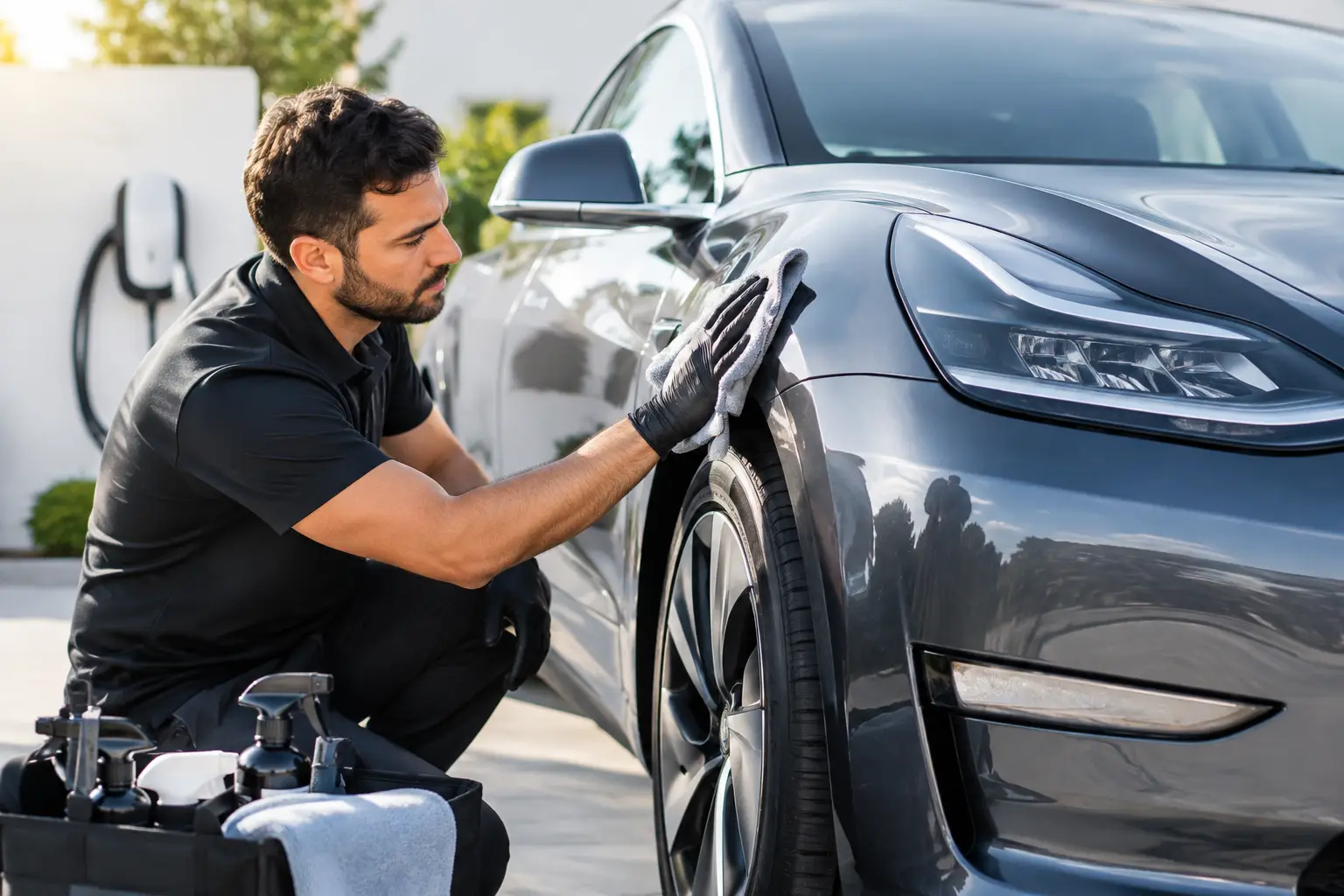
A clean EV is not just a better-looking EV. Road film, brake dust, bug residue, hard-water spots, and winter de-icing material can slowly diminish the finish, wheels, glass, and trim that make your vehicle feel new. Professional electric vehicle detailing gives those areas the focused care they need while respecting the technology built into a modern battery-powered vehicle.
For EV owners in Rapid City and across the Black Hills, that care matters year-round. A dusty gravel road, a sudden summer storm, or a winter drive through treated streets can leave more behind than a vehicle owner may notice at first glance. The right detailing plan protects pride of ownership today and helps preserve the condition buyers, appraisers, and future owners see later.
What Makes Electric Vehicle Detailing Different?
An electric vehicle can be washed and detailed safely, but it should not be handled as though every vehicle has the same materials, controls, and sensitive areas. Most EVs have large gloss-black panels, extensive exterior cameras and sensors, low-profile wheels, oversized center screens, and tightly designed charging-port doors. Many also use vegan leather, light-colored interiors, matte trim, or paint finishes that need product-specific care.
The key difference is thoughtful process, not unnecessary caution. Professional detailers use controlled water pressure, safe chemicals, clean wash media, and careful drying techniques around cameras, seals, sensors, and charging areas. The goal is a soul-deep clean without forcing water where it does not belong or leaving residue on the surfaces you interact with every day.
A charging port should be closed and secure before exterior washing begins. It is also wise to avoid spraying directly into the port, around open access panels, or into damaged seals. High-voltage components and orange cables are not areas for cosmetic experimentation. A qualified detailer focuses on the accessible appearance surfaces and follows the vehicle manufacturer’s care guidance when a question arises.
The Exterior Areas That Need the Most Attention
Paint, glass, and gloss-black trim
EV paint faces the same threats as any other vehicle, but the clean, minimal design of many electric models makes defects easier to spot. Swirl marks stand out on dark paint. Mineral deposits can dull glass roofs. Road grime turns gloss-black trim gray or hazy, especially after repeated exposure to snow, slush, and strong sun.
A proper exterior detail begins with safe removal of loose dirt and grime before contact washing. That order matters because rubbing dry grit across paint is how light scratches and swirls begin. From there, gentle hand washing, wheel cleaning, careful drying, and appropriate protection restore clarity without taking shortcuts.
If the finish looks dull, wash-induced scratching or oxidation may be part of the cause. Detailing can clean and protect the paint, but it cannot reverse damage to the clear coat, and a professional assessment can tell you what is realistic. Protection applied to a clean surface keeps the finish from getting worse.
Wheels, tires, and brakes
Electric vehicles often use aerodynamic wheel designs and can be heavier than comparable gas vehicles because of battery weight. That combination can make wheel faces, barrels, and tires especially important to maintain. Brake dust may be lighter on some EVs because regenerative braking reduces friction-brake use, but it does not disappear entirely.
In fact, EV owners should not overlook the brakes just because regenerative braking does much of the work. Moisture, road salt, and infrequent use can contribute to surface corrosion on brake components. Detailing is not a brake service, but regular wheel-area cleaning makes it easier to notice unusual rust, wear, or buildup that deserves a technician’s attention.
Tire dressings should provide a clean, even finish without a greasy sling that ends up on paint panels. The best result looks cared for, not artificially wet.
Cameras, sensors, and door handles
Exterior cameras and parking sensors collect road film quickly. A dirty lens can reduce visibility or affect convenience features, especially during wet or dusty conditions. Detailers should clean these areas gently with safe products and soft towels rather than aggressive brushes or harsh solvents.
Flush door handles, charge-port doors, badges, and panel gaps also deserve deliberate attention. These small details are where grime lingers, and they make the difference between a quick wash and a vehicle that looks properly finished.
Interior Care for a Screen-Focused Cabin
The EV interior is often where owners notice detailing most. Large touchscreens, piano-black consoles, glass roofs, white or light-colored seating, and minimalist dashboard materials create a premium feel. They also show fingerprints, dust, sunscreen residue, and smudges immediately.
Screens should be cleaned with the right microfiber towel and a product suitable for display surfaces. Overspray is a poor practice around electronics, vents, buttons, and seams. A professional process applies product with control, then lifts contamination rather than grinding it into the surface.
Seating requires the same material awareness. Vegan leather, leather, fabric, suede-like inserts, and perforated upholstery each respond differently to moisture and cleaners. Over-saturating seat seams, electronic seat controls, or perforations can create avoidable problems. The right approach is measured cleaning followed by conditioning or protection only when the material calls for it.
Do not forget the areas that quietly affect the driving experience: door jambs, cup holders, steering wheels, pedals, cargo areas, floor mats, and interior glass. Interior glass haze is particularly distracting at night and can become more noticeable around the wide windshields common in EVs.
Protection Is Where Detailing Pays Off
Cleaning resets the vehicle. Protection helps it stay that way. The right protection package depends on where and how the EV is driven, whether it is garaged, and how much maintenance the owner wants to handle between appointments.
For some vehicles, a quality paint sealant is a practical choice that improves water behavior and makes routine washing easier. For owners seeking longer-term protection and a sharper finish, a professionally installed ceramic coating can be a strong option. It can add gloss, improve resistance to environmental contamination, and reduce how stubborn dirt becomes during maintenance washes. It does not make paint scratch-proof, and it does not eliminate the need to wash the vehicle correctly.
Paint protection film may deserve consideration on high-impact areas such as the front bumper, hood edge, mirrors, rocker panels, and behind the wheels. This is especially relevant for Black Hills drivers who regularly encounter loose gravel, highway debris, and changing road conditions. The film-and-coating decision is not one-size-fits-all. A daily commuter, a weekend canyon-road driver, and an EV that spends most of its time in a garage will have different needs.
Seasonal EV Care in the Black Hills
Black Hills weather asks more of a vehicle’s finish than a mild climate does. Winter road treatment can cling to lower panels, wheel wells, and underbody surfaces. Spring brings mud and gravel. Summer sun can bake bugs and sap into paint. Fall dust finds every seal, vent, and jamb.
During winter, regular washing is less about appearance alone. Removing salt and chemical residue from painted lower panels, wheels, and accessible undercarriage areas helps limit long-term staining and corrosion concerns. After a storm or a long highway drive, do not wait until the grime is visibly thick. Earlier cleaning is usually easier and gentler on the finish.
In summer, bug removal should happen promptly. Bug residue can become difficult to remove after prolonged sun exposure, and aggressive scrubbing is exactly what a protected, well-maintained finish helps avoid. Keep a clean microfiber towel and an EV-safe quick-clean product on hand for light touch-ups, but leave heavy contamination and embedded fallout to a professional.
How Often Should an EV Be Detailed?
There is no fixed answer because driving habits matter more than the badge on the hood. An EV that travels gravel roads, parks outside, carries kids or pets, or runs frequent Black Hills highway miles will need attention more often than a lightly driven, garaged vehicle.
For many owners, a thorough professional detail once or twice a year, paired with regular maintenance washes, is a sensible baseline. Vehicles with ceramic coatings or paint protection film still benefit from professional maintenance because protection performs best when contaminants are removed correctly. If the paint feels rough, water no longer beads as expected, the interior has stubborn odors, or the finish has lost its clarity, it is time for a closer look.
Soul Detailers can help match the service to the vehicle’s condition, whether that means a refresh after winter, interior restoration before a road trip, a protective wax or sealant before the season changes, or recurring care that keeps a favorite EV ready to enjoy. A well-maintained electric vehicle should look as intentional as the technology that powers it, every time you walk up to it.