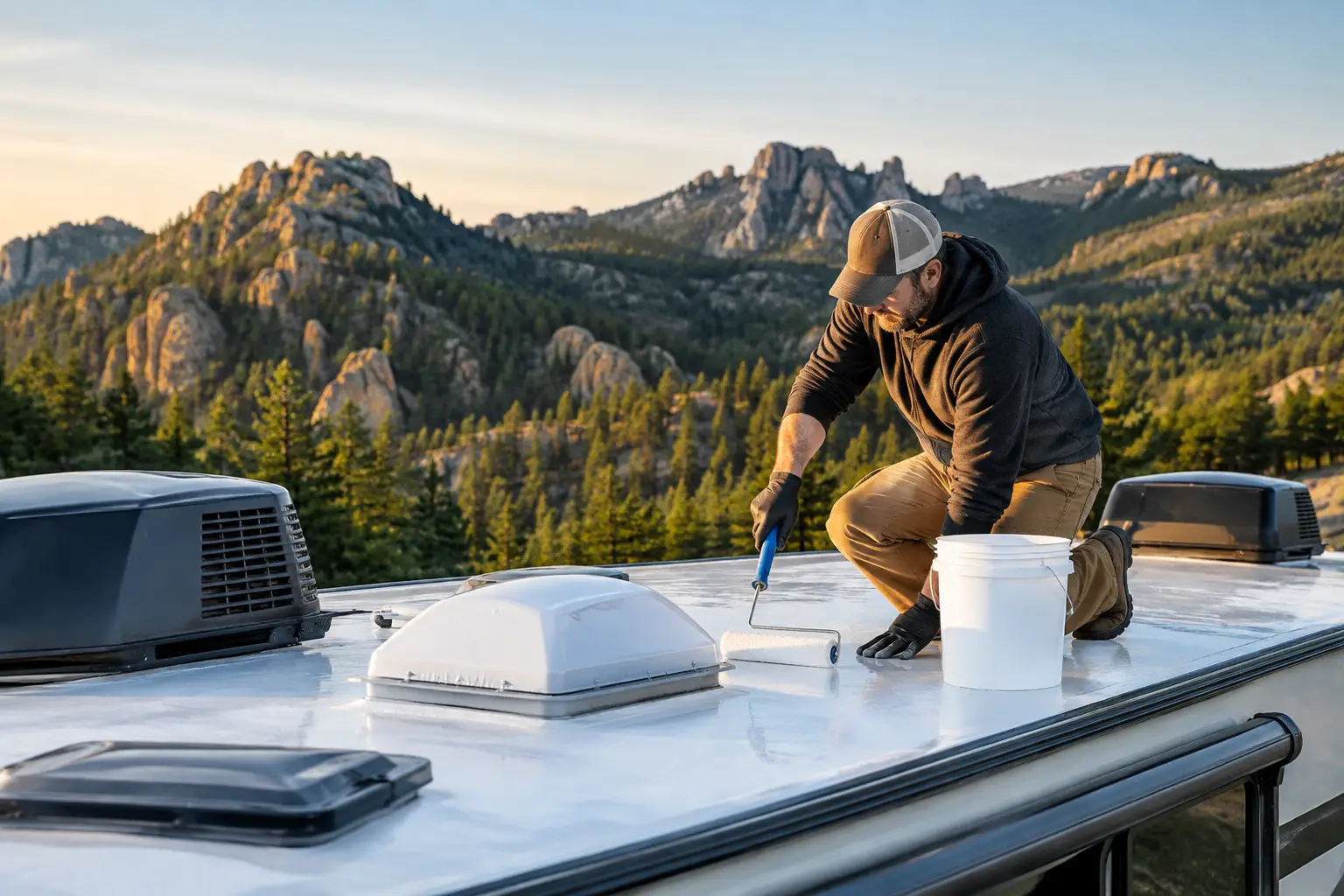
A roof can look fine from the ground while holding the early signs of expensive damage: chalky rubber, failed lap sealant, staining around vents, or grit lodged along the edges. The best RV roof treatment is not one universal bottle or coating. It is the right combination of cleaning, inspection, repair, and protection for your roof material and how you use your RV across the Black Hills.
For an RV owner, roof care is about more than keeping the rig presentable at the campground. A neglected roof can allow moisture into insulation, ceiling panels, cabinets, and electrical systems long before an interior leak becomes obvious. Regular professional care protects the appearance, comfort, and resale value of a major investment.
What Makes the Best RV Roof Treatment?
The best treatment starts with the roof itself. Most modern RVs and trailers have EPDM or TPO rubber roofs, while some older units, specialty trailers, and motorhomes may use fiberglass or aluminum. These materials do not respond to cleaning products, conditioners, and coatings in the same way.
A quality approach addresses four needs: safe removal of dirt and oxidation, close inspection of seams and penetrations, repair of failed sealant, and protection suited to the roof surface. Skipping the inspection is where many DIY treatments fall short. A bright, freshly cleaned roof is not necessarily a protected one.
In Rapid City and throughout the Black Hills, exposure adds another layer of consideration. Summer UV, wind-driven dust, pine needles, rapid temperature swings, hail, and winter snow all work against roof materials and sealants. The treatment that makes sense for a lightly used seasonal trailer may not be enough for a motorhome that spends months outdoors.
Start With Your RV Roof Material
EPDM Rubber Roofs
EPDM is a durable rubber membrane, but it can oxidize and leave a white or dark chalky residue. It needs a cleaner made specifically for rubber roofing. Petroleum-based cleaners, harsh solvents, abrasive pads, and many household chemicals can damage the membrane or strip away its protective surface.
For an EPDM roof in good condition, a thorough wash followed by an approved protectant may be the best route. If the roof is heavily oxidized, has recurring black streaks, or shows wear around seams, it may need a more involved restoration plan after repairs are completed.
TPO Rubber Roofs
TPO roofs are commonly white and can resist UV exposure well, but they still collect grime and may develop surface staining. Their seams, vents, skylights, antenna mounts, and edge molding deserve close attention. A compatible cleaner and UV-focused protectant are usually appropriate for a sound TPO roof.
Do not assume EPDM and TPO products are interchangeable. Before applying any treatment, confirm the roof material through the RV manufacturer or documentation. Using an incompatible coating can lead to adhesion problems, discoloration, or a warranty issue.
Fiberglass and Aluminum Roofs
Fiberglass roofs often benefit from careful washing, oxidation removal when needed, polishing, and a compatible protectant or coating. Aluminum roofs require a different mindset because corrosion, dents, loose fasteners, and sealant condition can matter as much as surface shine.
These hard roofs may look more durable, but every roof penetration remains a potential water entry point. The treatment should focus as much on the details around vents and seams as the wide, visible roof panels.
Cleaning Is Essential, but It Is Not the Whole Job
A proper RV roof cleaning removes dirt that can hold moisture against the surface and exposes areas that need attention. It also prevents roof runoff from creating streaks on freshly detailed sidewalls. That said, the wrong cleaning process can create more work than it solves.
High pressure used too close to the roof can lift sealant, force water under trim, or damage older membranes. Stiff brushes can scuff rubber surfaces. A better process uses roof-safe products, controlled agitation, and careful rinsing while keeping an eye on sealant joints.
This is one reason professional RV detailing has value beyond appearance. The technician can work methodically around skylights, air conditioners, solar mounts, plumbing vents, ladder brackets, and transition seams instead of treating the roof as one flat surface. Those areas are where minor maintenance issues often become major repairs.
When a Protectant Is Enough
If the roof membrane remains flexible, the seams are intact, and there are no signs of leaking or widespread deterioration, an approved protectant can be a smart maintenance treatment. It can help reduce UV exposure, keep the surface easier to clean, and slow the dry, weathered look that develops over time.
Protectants are especially useful for owners who store their RV outdoors. They are not permanent, however. Most need periodic reapplication, and they cannot repair cracked sealant, punctures, soft spots, or a membrane that has reached the end of its service life.
Think of a protectant as routine preservation, not a substitute for repairs. It works best on a clean, stable surface that has been inspected first.
When a Roof Coating Makes Sense
A roof coating can provide a more substantial protective layer, but it is not automatically the best RV roof treatment for every unit. Coatings can be valuable when a compatible roof is weathered, difficult to keep clean, or approaching a point where additional UV defense is warranted. Some products can also help reflect heat.
The trade-off is preparation. A coating is only as good as the surface beneath it. Loose sealant, contamination, trapped moisture, or poor adhesion can cause peeling and leave an owner with a difficult cleanup or repair. Coating over an active leak is never a solution.
Before coating, the roof should be cleaned thoroughly, allowed to dry completely, and repaired with materials compatible with both the roof membrane and the planned coating. In some cases, replacing worn sealant and continuing with regular cleaning and protection is the better investment. In others, a full restoration coating is the practical choice.
Watch the Seams, Not Just the Surface
The roof field gets the attention because it is large and visible. The seams deserve more. Inspect lap sealant around roof openings at least twice each year and after hail, heavy wind, or a long road trip. Look for cracking, gaps, lifting edges, bubbling, or sealant that has become brittle.
Pay particular attention to the front cap seam and areas around the air conditioner, skylights, plumbing vents, and roof-mounted accessories. Water may travel from the actual opening before it appears inside the RV, so an interior stain is often not directly below the source.
If you find suspicious damage, avoid covering it with a random caulk tube from the hardware aisle. RV roofing systems need compatible sealants. The wrong material can fail quickly or make a later repair more difficult.
A Practical Roof Care Schedule
For most Black Hills RV owners, a roof inspection in spring and again before winter storage provides a dependable baseline. Spring service removes road film, pollen, tree debris, and winter buildup before the summer travel season. A fall inspection catches issues before snow and freeze-thaw cycles have time to worsen them.
Owners who park under trees, travel on gravel roads, or keep their RV outside year-round may need more frequent cleanings. After a hailstorm or high-wind event, it is wise to inspect promptly rather than waiting for the next scheduled service.
Between professional visits, keep the roof clear of branches, leaves, and standing debris. Do not walk on the roof unless it is designed to support foot traffic and you can do so safely. Even on walkable roofs, distribute weight carefully and avoid stepping near unsupported edges, vents, or skylights.
Choosing Service Over Guesswork
A professional RV roof treatment should begin with an honest assessment, not a one-size-fits-all coating recommendation. Ask what roof material you have, what products are compatible with it, whether sealant issues were found, and what maintenance interval is realistic for your storage conditions.
At Soul Detailers, the goal is the same as it is with every vehicle appearance service: give the surface the care it actually needs, without hiding the condition under a temporary shine. A clean roof, sound sealant, and appropriate protection create the kind of confidence that matters when your RV is miles from home.
Your next trip should start with more than a clean exterior. It should start with the peace of mind that the surface above you has been treated with the same care you expect from the rest of your RV.