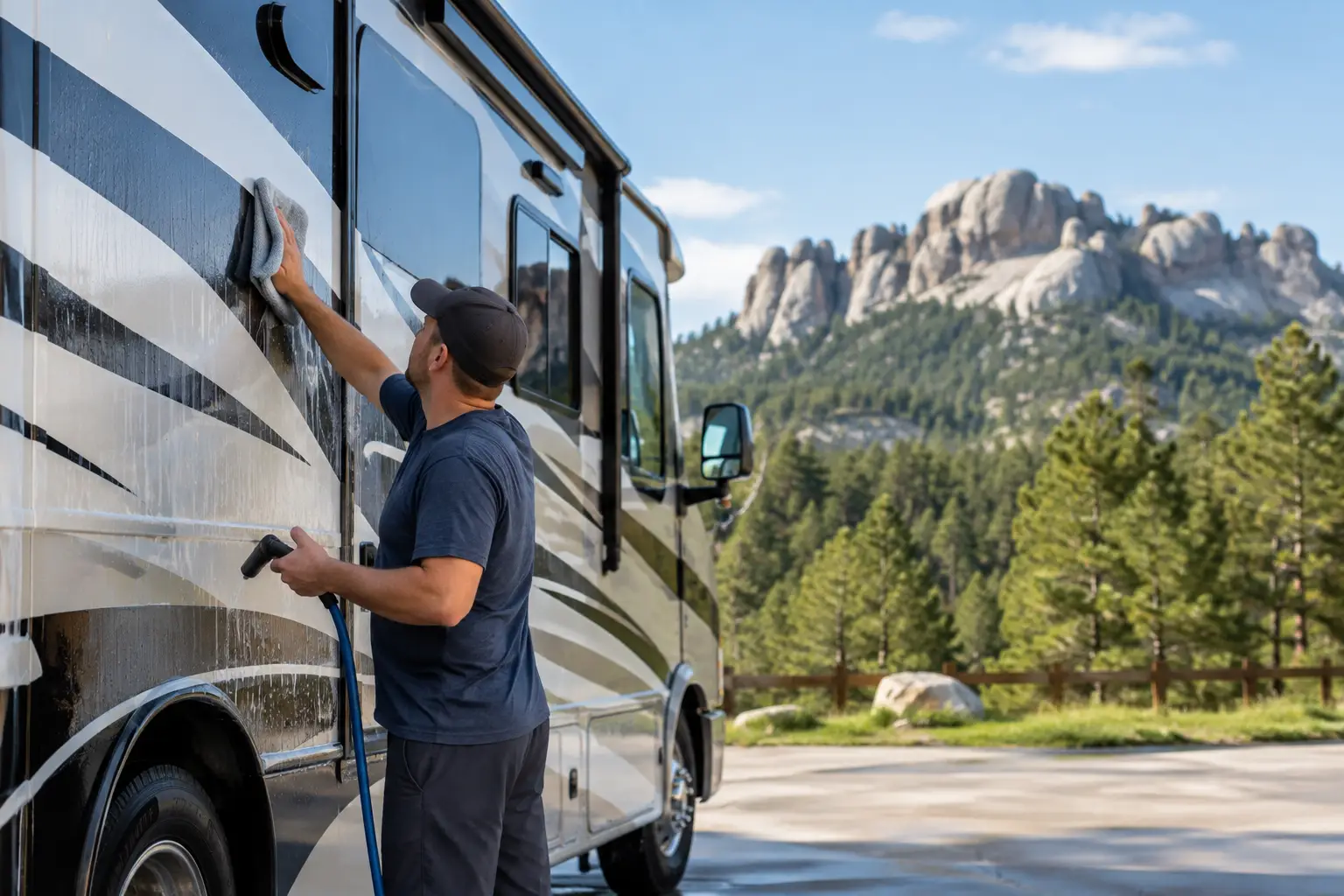
A weekend in the Black Hills can leave an RV with more than good memories. Dust settles into seams, bugs bake onto the front cap, road film dulls the lower panels, and a little campground mud has a way of finding every step and storage compartment. This RV detailing service guide explains what professional care should cover, when it is worth scheduling, and how the right service helps protect a vehicle built for the long haul.
An RV is not simply a larger version of a passenger vehicle. It has broad exterior surfaces, delicate roof and seal areas, awnings, slide-outs, wheels, tanks, storage bays, and an interior that often serves as a kitchen, bedroom, and living room. Thorough detailing means treating each of those surfaces with the right process rather than giving the whole coach a quick wash.
What an RV Detailing Service Should Address
The best starting point is an honest assessment of the RV's size, finish, condition, and use. A motorhome that spends months outside in western South Dakota needs different attention than a trailer stored indoors and used a few times each summer. Class A motorhomes, fifth wheels, travel trailers, campers, and toy haulers all have their own access challenges and material combinations.
A professional detail should begin with the exterior condition. This includes paint or gel coat, decals, trim, windows, wheel wells, steps, entry doors, bumpers, mirrors, and the lower areas that collect the most road grime. The goal is not only to improve shine. It is to safely remove contamination without grinding grit into the finish or using products that leave staining, haze, or residue behind.
Interior work should receive the same level of attention. RV cabins hold on to dust, food residue, pet hair, sunscreen, tracked-in dirt, and odors more easily than many owners expect. Because the space is compact, a clean interior makes a dramatic difference in how the RV feels before a trip, after a long season, or when preparing it for sale.
Exterior cleaning is about more than appearance
A proper exterior wash uses methods appropriate for the RV's materials and condition. Bug residue, tree sap, mineral spots, and road film often need more than soap and water. They require careful pre-treatment and controlled cleaning so the surface is lifted clean rather than scrubbed aggressively.
This is especially relevant around decals, vinyl graphics, aged plastic trim, and oxidized gel coat. Strong chemicals or rushed washing can fade graphics, dry out trim, or create streaking. Professional care takes more time, but that trade-off matters when the vehicle is a major investment.
Windows, wheels, tires, steps, and entry areas also deserve focused work. These areas affect the finished look, but they also influence day-to-day usability. Clean steps and door frames help keep dirt from being carried back into the cabin, while properly cleaned wheels and tires make even an older coach look more cared for.
Interior detailing should fit the way you travel
An RV interior detail is not just a vacuum pass and a quick wipe-down. It should address the surfaces people touch and use constantly: seating, floors, tables, counters, cabinetry, cupholders, dash areas, bathroom fixtures, sleeping areas, and storage spaces. Crevices around seats and consoles can hide debris, while galley areas may need attention for grease and food residue.
Odor treatment can be valuable after pets, extended travel, spills, or winter storage. Still, a fresh scent should never cover a problem. If there is moisture damage, mold, or a plumbing issue, the source needs to be repaired before detailing can provide a lasting improvement.
For families and pet owners, the right service may prioritize upholstery cleaning, hair removal, floor care, and high-touch surface sanitation. For owners preparing to sell or trade, the focus may shift toward presentation: clean storage bays, polished entry points, a bright windshield area, and a cabin that feels ready for its next owner.
Choosing the Right RV Detailing Service Level
There is no single package that fits every RV. The right level depends on its current condition and what you need it to do next. A well-maintained camper that needs a seasonal refresh may benefit from a thorough wash, interior reset, and finishing details. An RV returning from a long trip, sitting through a dusty summer, or being prepared for a sale may need a deeper service.
Start by considering three questions. Has the RV been exposed to heavy road film, bugs, mud, tree debris, or hard-water spotting? Does the interior have stains, odors, pet hair, or built-up dust? Are you trying to maintain a finish that is still in good shape, or correct visible neglect and weathering?
Maintenance detailing is generally the most efficient choice for an RV that receives regular care. It prevents grime from becoming harder to remove and makes each appointment more predictable. Deep detailing is better when contamination, neglected interiors, or visible buildup require extra labor and more specialized products.
Higher-level exterior protection can make sense for motorhomes and trailers with paint that has lost clarity or gel coat that looks dull. However, protection is not a universal answer. It depends on oxidation, graphics, previous damage, and the condition of the surface. A reputable detailer should explain what can realistically be improved before promising a dramatic result.
Protection Matters in the Black Hills
Rapid City and the surrounding Black Hills offer outstanding places to travel, but the environment is hard on exterior surfaces. Intense sun, changing temperatures, windblown dust, gravel roads, insects, pollen, and storm exposure can take a visible toll over time. Protection helps reduce that burden, but it does not eliminate the need for regular cleaning.
A quality protectant or coating can make routine washing easier, improve water behavior, and help maintain the appearance of paint, gel coat, trim, and other treated surfaces. The best option depends on the RV, how it is stored, how often it is driven, and the owner's maintenance habits. A premium protection service is a smart investment for many owners, but only when the surface has been properly cleaned and prepared first.
Pay attention to vulnerable areas between services. Roof seals, caulking, window edges, slide-out seals, awning fabric, and compartment gaskets need routine inspection. Detailing helps keep these areas clean enough to spot issues early, but it is not a substitute for mechanical repair or seal maintenance.
Mobile or Shop Detailing: What Fits Your RV?
Mobile detailing offers real convenience when an RV is parked at home, in storage, or at a location where there is enough room to work safely. It can save the time and stress of moving a large coach across town, especially when the priority is a seasonal cleaning or interior refresh.
A shop appointment can be the better choice when access, weather, power, water, or contamination control matter more. It may also be preferable for more involved appearance work that benefits from a controlled environment. The right choice depends on the service being performed and the condition of the RV, not simply which option feels easier at first.
Before booking, make sure the provider understands your vehicle type and can clearly explain what is included. Transparent pricing should account for the RV's size, condition, desired services, and access needs. A quote that seems unusually low may leave out the labor-intensive areas that make a finished RV look truly complete.
RV Detailing Prices and Mobile Service in the Black Hills
Soul Detailers prices RV and trailer detailing by the foot:
- Wash, $7 per foot: exterior wash and dry.
- Oxidation removal, $1 per foot: an add-on for faded, chalky paint and gelcoat.
- Spray on ceramic wax, $2 per foot: an add-on for spray-applied protection.
- Premium hand wax, $4 per foot: an add-on for a deep, lasting shine.
These rates cover travel trailers, fifth wheels, toy haulers and motorhomes, as well as horse, stock and cargo trailers. Black streak removal is quoted separately. See the full pricing page or our RV and trailer detailing page.
Most of our RV work is mobile. We come to campgrounds, RV parks, storage lots and driveways around Rapid City, Keystone, Hill City, Custer and the rest of the Hills. We need room to work around the rig and access to a water source. Mobile service is free within 30 minutes of our Rapid City shop, then $60 per roundtrip hour.
How Often Should You Detail an RV?
For many Black Hills owners, a professional detail before the main travel season and another after the season is a practical baseline. This schedule removes winter storage dust before departure and clears away road residue before the RV sits again. Owners who travel frequently, park beneath trees, carry pets, or use gravel routes may benefit from more frequent maintenance.
Do not wait until the finish looks severely neglected. Bugs, mineral deposits, sun exposure, and embedded grime become more difficult and costly to address when they remain on the surface for months. Regular care protects pride of ownership, preserves the experience of traveling in a clean space, and supports long-term resale value.
Your RV carries the gear, people, and memories that make the trip worth taking. Give it care that reaches beyond a fast wash. At Soul Detailers, a soul-deep clean means treating your coach with the same respect you bring to every mile ahead.