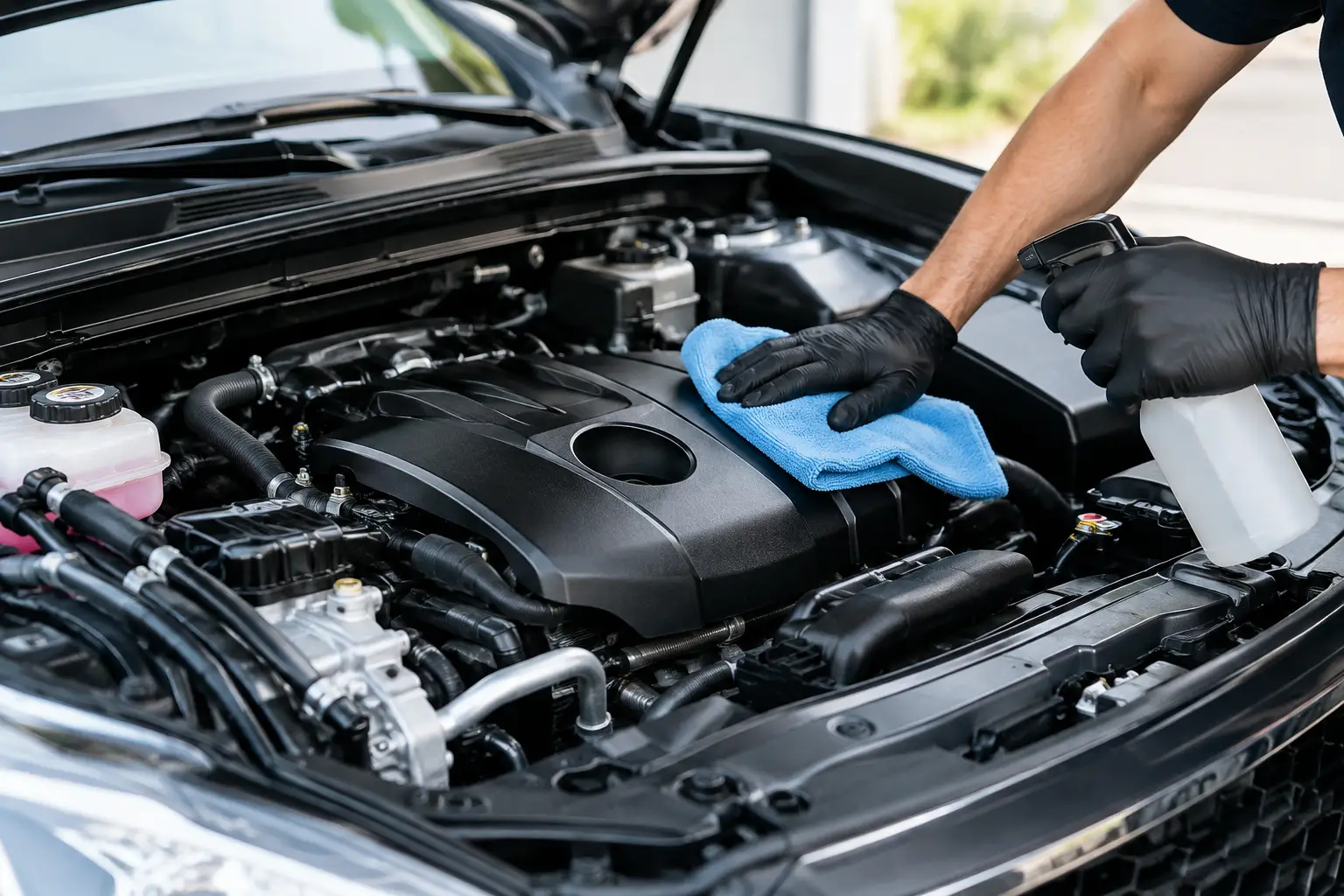
A clean exterior gets attention, but the condition beneath the hood tells a more complete story about how a vehicle has been cared for. Professional engine bay cleaning removes the film of dust, road grit, oil residue, and Black Hills grime that collects around hoses, covers, brackets, and hard-to-reach surfaces. Done correctly, it restores a crisp, cared-for appearance without creating unnecessary risk for the electrical and mechanical components that keep your vehicle moving.
For truck owners, daily drivers, weekend motorcycles, and RVs that see long stretches of open road, this is not a quick spray-and-rinse service. It is detailed appearance care with a careful process behind it.
Why Engine Bay Cleaning Is Worth Doing
An engine bay is exposed to more than most people realize. Dust enters through gaps in the hood area. Road salt, mud, pollen, and water splash upward from below. Small spills during oil changes or fluid top-offs can leave residue that traps even more dirt. Over time, a once-clean compartment can look neglected even when the vehicle runs well.
Cleaning this area has a practical benefit beyond presentation. When grime is removed, it becomes easier to notice fresh oil seepage, coolant residue, cracked hoses, loose caps, chewed wiring, or signs of rodent activity. Detailing does not replace mechanical service, but a clean engine compartment gives owners and technicians a clearer view of what is happening under the hood.
Appearance matters, too. A clean engine bay supports pride of ownership and makes a vehicle feel fully cared for, especially before selling, trading in, attending a show, or bringing home a recently purchased vehicle. Buyers often read a dirty engine compartment as a signal that routine maintenance may have been ignored, whether that assumption is fair or not.
There is a trade-off, however. A heavily soiled work truck may need more time and product than a lightly dusty commuter car. Older vehicles, modified vehicles, and bays with exposed wiring or aging seals call for an even more measured approach. The goal is never to make everything look wet and artificially dressed. The goal is clean, dry, orderly, and appropriate for the vehicle.
What Safe Engine Bay Cleaning Looks Like
The biggest misconception is that engine bay cleaning means blasting every surface with high-pressure water. That approach can force moisture into places it does not belong and can create headaches that were avoidable. Modern vehicles contain sensitive connectors, sensors, fuse boxes, ignition components, and electronic control systems. Older vehicles may have brittle insulation, weakened seals, or non-factory wiring that deserves added caution.
A professional process begins with an inspection. The detailer looks for exposed wiring, damaged insulation, loose battery connections, open filters, fluid leaks, and aftermarket accessories. Areas that need protection are covered or avoided before any cleaner is applied.
The engine should also be cool to the touch. Applying cleaning chemicals or water to a hot engine can cause products to dry too quickly, stain surfaces, or create thermal stress. Once the bay is ready, an appropriate degreaser or all-purpose cleaner is applied selectively rather than indiscriminately. The product needs time to loosen contamination, but not so long that it dries on plastic, painted metal, or rubber.
Soft brushes do much of the real work. They agitate buildup around plastic covers, metal brackets, battery trays, cowl areas, and textured components where wiping alone will not reach. Light rinsing or controlled steam may be used depending on the vehicle and the contamination level. The key is control: enough moisture to remove residue, not enough to saturate vulnerable areas.
Drying is just as important as cleaning. Compressed air, microfiber towels, and careful attention around crevices help remove water that could otherwise linger near connectors and fasteners. A quality, non-greasy dressing can then be applied to suitable plastic and rubber surfaces to restore an even finish. It should enhance the appearance, not leave a slick coating that attracts dust or makes future inspections harder.
What Should Not Happen
A quality service does not disguise problems. Heavy dressing over leaks, cracked hoses, faded components, or corroded terminals may look good for a moment, but it does not help the owner make informed decisions about the vehicle.
It should also not involve harsh chemicals on every surface. Certain materials, including uncoated aluminum, aging rubber, painted components, and delicate electrical areas, require the right product and technique. A clean engine bay is valuable. A clean engine bay with an electrical issue afterward is not.
When Your Vehicle Needs Attention Under the Hood
There is no universal schedule because driving habits and vehicle use matter. A garaged sedan driven mostly on paved roads may only need detailed engine compartment care once or twice a year. A pickup that sees gravel roads, job sites, winter slush, or frequent towing may benefit from more frequent inspection and cleaning.
Motorcycles deserve their own consideration. Their engines and mechanical components are more exposed, and cleaners must be chosen carefully around polished metal, painted surfaces, chains, belts, and electrical connections. RVs and trailers can accumulate dust, insects, and road debris during long-distance travel, particularly around generators, battery compartments, and accessible mechanical areas.
A few signs make it clear that an appointment is worthwhile: visible grease buildup, a dusty and stained compartment after winter driving, residue around the battery area, accumulated leaves near the cowl, or an engine bay that no longer matches the condition of the rest of the vehicle. If you are preparing for a sale, a professional inspection, or an important event, it is also one of the details that can lift the overall presentation.
Can You Clean an Engine Bay Yourself?
You can, but the answer depends on your comfort level, the vehicle, and the condition of the bay. Light dust removal with a dry microfiber towel, a soft detailing brush, and careful vacuuming around leaves and debris is generally manageable for many owners. If the engine compartment has obvious oil residue, corrosion, aging wiring, exposed electrical connections, or a history of mechanical concerns, professional service is the smarter choice.
Home cleaning often goes wrong in predictable ways: too much pressure, too much cleaner, poor drying, or the use of glossy products that leave residue on everything. The savings from doing it yourself can disappear quickly if moisture reaches a connector or if harsh chemicals discolor trim and metal.
For owners who take pride in keeping their vehicle dialed in, the best approach is simple. Maintain the light surface dust between appointments, address mechanical leaks with a qualified repair professional, and let trained detailers handle the deeper cosmetic cleaning. That balance protects both the appearance and the function of the vehicle.
A Better Finish Than a Quick Rinse
At Soul Detailers, engine compartment care is approached with the same respect given to paint, interior materials, wheels, and trim. The process is tailored to the vehicle in front of us, whether it is a family SUV, a hard-working pickup, a motorcycle, or a road-ready RV. There is no benefit in treating every engine bay the same way.
The best result is subtle but unmistakable: surfaces look renewed, plastic and rubber have a clean natural finish, and the compartment feels maintained rather than masked. It is the kind of soul-deep clean that makes opening the hood feel as satisfying as stepping back to admire the exterior.
If you have been putting off attention under the hood because it seems too risky or too time-consuming, start with a professional assessment. A careful cleaning can bring clarity, confidence, and a level of finish your vehicle deserves.