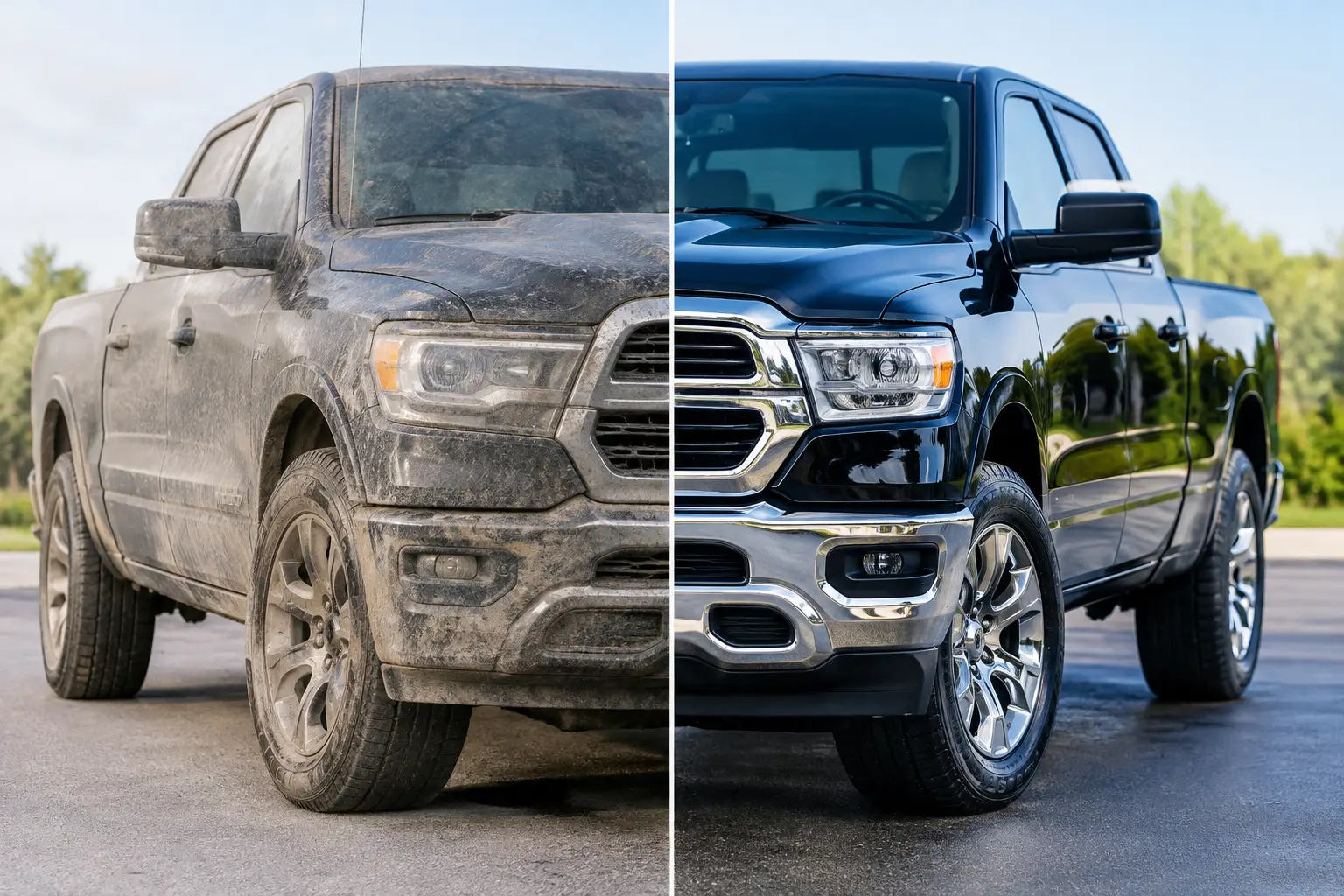
A truck can look clean from ten feet away and still carry months of hard use in every seam, cup holder, wheel well, and paint panel. That is why truck detailing before and after results can be so dramatic. The real change is not just a shinier hood. It is the return of a well-kept, comfortable truck that reflects the pride you take in owning it.
For drivers in Rapid City and throughout the Black Hills, trucks deal with more than ordinary road dust. Gravel roads, winter de-icer, mud, ranch work, job sites, pets, pollen, and long highway miles all leave their mark. Professional detailing addresses that buildup methodically, with the right process for the truck's condition and the surfaces being treated.
What Truck Detailing Before and After Really Shows
The strongest before-and-after difference is usually a combination of many smaller corrections. A professional detailer does not simply apply tire shine and vacuum the floors. The work starts with an honest assessment of the truck: how heavily soiled it is, whether the paint has embedded contamination or swirl marks, and whether the interior needs a maintenance clean or deeper restoration.
On the exterior, the transformation often begins with a thorough hand wash that safely loosens grime from the paint, trim, grille, bed rails, and lower panels. Wheels and tires receive separate attention because brake dust, mud, and road film cling to these areas differently than they do to painted surfaces. Clean wheels and properly dressed tires can change the entire stance of a truck, especially on darker colors.
The paint tells an even bigger story. A truck that appears dull may be covered in bonded contaminants that washing alone cannot remove. After proper decontamination, the surface feels smoother and reflects light more evenly. If paint correction is appropriate, polishing can reduce the appearance of swirl marks, oxidation, and light scratches. The result is more depth and clarity, not an artificial-looking gloss.
There is a trade-off worth understanding. Paint correction improves defects, but it is a skilled process that removes a very fine amount of clear coat. It should be matched to the paint's condition and the owner's expectations, not treated as an automatic add-on for every vehicle. A good detail plan protects the finish while delivering a visible improvement.
The Interior Difference You Feel Every Day
Most owners notice the interior transformation before they even leave the driveway. The cabin is where a truck collects the evidence of daily life: grit in carpet fibers, dust in vents, spilled drinks in the console, dog hair behind the seats, and fingerprints on touchpoints.
A complete interior detail focuses on more than what a quick vacuum can reach. Floor mats are cleaned, carpets are treated based on their material and condition, and cracks around seats, controls, door panels, and cup holders are carefully addressed. Leather, vinyl, plastic, and upholstery each require a different approach. Using a harsh cleaner in the name of speed can leave surfaces dry, slippery, or discolored, which is the opposite of premium care.
Before-and-after photos often highlight stained seats or dirty carpet because the contrast is easy to see. But the less visible work matters just as much. Clean vents, refreshed touchpoints, clear interior glass, and neutral odors make a truck more pleasant for commuting, hauling family, or heading out for a weekend in the Hills.
Odor removal deserves realistic expectations. Light odors from food, smoke, pets, or damp gear may respond well to deep cleaning and targeted treatment. Long-standing odors that have reached padding, headliners, or hidden areas can require more extensive work. An experienced detailer should explain what is possible rather than promise that every odor will disappear in one visit.
Why Trucks Need a Different Detailing Approach
Trucks are not simply larger cars. Their height, wheel size, bed configuration, running boards, work use, and exterior trim create different cleaning challenges. A family-owned pickup that sees mostly pavement will need a different service level than a work truck carrying tools and materials every day.
The bed is a prime example. Dirt, leaves, mulch, and moisture can collect along seams and around tie-down points. A bed liner may hide dirt well, but it still benefits from a thorough cleaning to prevent buildup and keep the truck presentable when it is time to haul equipment, furniture, or recreational gear. Exterior chrome, black plastic trim, polished wheels, and aftermarket accessories also need products chosen for their specific materials.
For lifted trucks or vehicles with oversized tires, access and cleaning time can increase. That does not make detailing less worthwhile. It simply means the estimate should reflect the actual condition, size, and labor involved. Transparent pricing helps owners choose the service that fits their truck instead of paying for a vague, one-size-fits-all package.
Protection Is What Makes the After Last
A detail without protection can still look excellent, but the finish will face the same weather and road conditions as soon as the truck leaves. Applying an appropriate protectant helps preserve the work and makes future maintenance easier.
Paint protection can add gloss while creating a barrier against dirt, rain, UV exposure, and routine contamination. Interior protection can help guard frequently touched vinyl, leather, and trim from drying and fading. Tire and trim treatments restore a clean, finished appearance without making surfaces look excessively wet or greasy.
The right protection depends on how the truck is used. A garage-kept weekend truck may justify a higher-level paint correction and long-term protective treatment. A daily-driven work truck may benefit most from regular cleaning and durable, practical protection that keeps road film and mud easier to manage. Neither choice is wrong. The best value is the service plan that matches the truck's real life.
When a Detail Makes the Biggest Impact
Truck detailing is valuable at any point, but certain moments make before-and-after results especially meaningful. Preparing to sell or trade a truck is one of them. A clean, odor-free interior and polished exterior can improve a buyer's first impression and help show that the vehicle has been cared for. Detailing cannot erase mechanical wear, but it can make the condition of the truck easier to appreciate.
A detail is also smart after winter, before a seasonal trip, after a demanding work season, or when a truck has simply reached the point where normal washing no longer feels like enough. The goal is not perfection for its own sake. It is restoring the vehicle to a condition that feels good to drive, display, and maintain.
For trucks with severe staining, heavy pet hair, neglected paint, or years of accumulated grime, a first appointment may need to focus on recovery rather than routine maintenance. After that deeper reset, scheduled upkeep is usually more efficient and cost-effective than waiting for the buildup to return.
Choose Care That Matches Your Truck
The most convincing truck detailing before and after results come from a process tailored to the vehicle, not a rushed checklist. At Soul Detailers, that means considering your truck's size, surfaces, condition, and how you use it across Rapid City and the Black Hills.
A clean truck is easier to care for, more enjoyable to drive, and better positioned to hold its visual appeal over time. When mud, road film, and everyday wear have started to overshadow the truck you were proud to buy, a professional detail can give you a fresh starting point that lasts well beyond the first look.