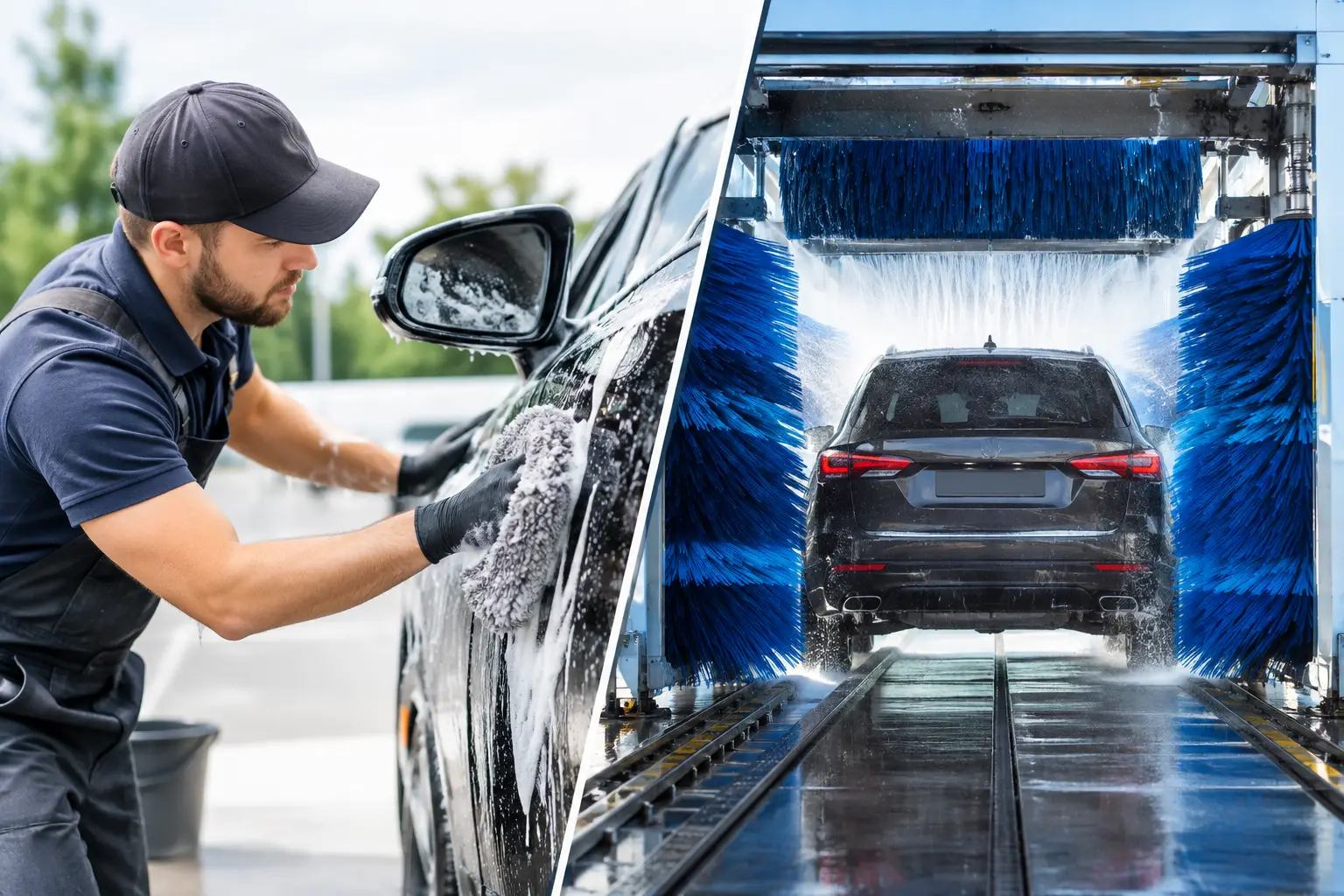
A Black Hills drive can leave more on your vehicle than a little dust. Road salt, gravel grit, bug residue, pine sap, and mud can build up fast, especially on trucks, SUVs, motorcycles, and RVs. The choice between a hand wash versus tunnel wash affects more than how clean your vehicle looks when you pull away. It can influence how well the paint, trim, wheels, and protective coatings hold up over time.
A tunnel wash has a place in a busy maintenance routine. A professional hand wash offers a different level of attention. The better choice depends on your vehicle’s condition, your schedule, the type of contamination it carries, and how much you value preserving the finish.
Hand Wash Versus Tunnel Wash: The Core Difference
The biggest difference is control. In a tunnel wash, the vehicle moves through a fixed system of chemicals, water, brushes or cloth materials, and dryers. It is built for speed and volume. Most washes take only a few minutes, making them convenient after a muddy commute or before an event.
A hand wash is performed by a technician who can assess the vehicle as it is cleaned. That means adjusting the approach around delicate paint, aftermarket accessories, textured trim, oversized tires, trailer hardware, motorcycle components, or a heavily soiled lower body. Rather than treating every vehicle the same, a hand wash can focus on the areas that actually need extra care.
Neither option is automatically right for every owner. A newer daily driver that receives frequent washes may do fine with a quality touchless tunnel wash between deeper services. A vehicle with dark paint, ceramic coating, fragile accessories, or stubborn road film generally benefits from the controlled process of a hand wash.
What a Tunnel Wash Does Well
Tunnel washes earn their popularity for a reason. They are fast, predictable, and widely available. If your vehicle has picked up fresh dust or light dirt and you need it presentable quickly, a tunnel can be a practical solution.
Many modern tunnels also offer undercarriage rinses, wheel cleaning, and drying systems that are difficult to duplicate in a driveway. During winter and early spring, an undercarriage rinse can be especially useful for removing salt and road treatment residue from areas you do not see every day.
For routine use, a touchless tunnel is often the gentler tunnel option because it relies primarily on water pressure and cleaning chemistry rather than physical contact. Still, strong chemicals may be needed to remove grime without agitation. Those products can reduce the life of waxes or dressings if used frequently, and they may not fully remove bonded contaminants.
Soft-cloth tunnels can provide a more visibly complete wash than touchless systems, but their results depend on how well the equipment is maintained and how clean the wash media remains throughout the day. If grit is trapped in cloth strips or brushes, that material can drag across paint. On lighter-colored vehicles, the effect may be hard to notice. On black, deep blue, and other dark finishes, fine swirl marks can become very visible in direct sunlight.
That does not mean every tunnel wash damages paint. It means the process has less vehicle-specific control. The equipment cannot pause to inspect a scratched panel, avoid a loose trim piece, or spend additional time on bug residue behind a grille.
Where Hand Washing Adds Value
A quality hand wash begins before the mitt touches the paint. Heavy debris should be rinsed away first so loose grit is less likely to be rubbed across the surface. From there, a technician can use clean wash media, proper lubrication, and a methodical sequence that keeps dirtier areas separate from cleaner painted panels.
This is particularly valuable for vehicles that work hard in the Black Hills. Trucks that travel gravel roads, SUVs used for trail access, and RVs that sit outdoors can collect contamination that a quick automated wash may only partially remove. A hand process allows for attention around wheel wells, running boards, door jambs, emblems, roof rails, fuel doors, mirrors, and other places where grime tends to stay behind.
Hand washing also makes it easier to protect specialty surfaces. Matte paint, satin wraps, polished metal, chrome, delicate motorcycle finishes, and certain aftermarket coatings all have different needs. The wrong brush, harsh cleaner, or aggressive drying process can leave marks or alter the appearance of the surface.
The drying stage matters, too. Water left around mirrors, trim, handles, and body seams can drip down the side of a clean vehicle and leave mineral spots. A careful hand dry can address those areas while also revealing paint defects, tar, sap, embedded fallout, or fading trim that deserves further attention.
At Soul Detailers, this deeper level of observation is part of the difference between washing a vehicle and caring for its appearance. A clean exterior is the goal, but seeing what the surface needs next is what helps protect the investment.
Paint Safety Depends on More Than the Wash Method
It is tempting to frame hand washing as safe and tunnel washing as risky. The truth is more specific. Poor technique can cause problems in either setting. A hand wash done with one dirty bucket, rough towels, and no pre-rinse can create scratches. A well-maintained touchless wash may be a reasonable choice when the vehicle only needs a quick rinse.
Paint condition should guide the decision. If your vehicle already has visible swirls, dullness, water spots, or oxidation, a tunnel wash will not correct those issues. It may make the vehicle look cleaner, but the underlying defects remain. A thorough hand wash, decontamination, and protection will help the finish look its best and respond better to future washing, though deeper damage may need a body shop's assessment.
If you have recently invested in ceramic coating, premium wax, or a high-quality sealant, choose your wash method carefully. Frequent abrasive contact and harsh detergents can work against the protection you paid for. A hand wash using coating-safe products helps preserve the gloss and hydrophobic behavior that make maintenance easier.
Convenience, Cost, and Real-World Use
A tunnel wash usually costs less per visit and requires less time. For a commuter vehicle that sees mostly paved roads and gets washed often, that convenience may outweigh the limitations. It is also a practical answer when winter conditions make at-home washing unrealistic.
A hand wash takes longer and generally costs more because it requires skilled labor, careful products, and individualized attention. The value becomes clearer when your vehicle has a higher level of soil, sensitive surfaces, larger dimensions, or a finish worth preserving. Owners of trucks, lifted SUVs, motorcycles, RVs, and trailers often find that standard tunnel equipment does not reach, fit, or safely clean every area that matters.
Mobile hand washing and detailing can also change the convenience equation. Instead of spending time driving to a wash, waiting in line, and inspecting the results afterward, you can schedule care around your home or workplace when conditions allow. Shop-based service remains a strong option for more intensive work, especially when controlled conditions are needed.
Choose Based on Your Vehicle’s Needs
A tunnel wash may fit if your vehicle needs a fast refresh, the finish is in good condition, and you understand that it is maintenance rather than detailed care. Touchless is often the more conservative choice when you want to minimize physical contact.
A hand wash is usually the stronger choice when the vehicle is heavily soiled, coated, customized, oversized, or personally meaningful. It is also the better fit when you want someone to notice the details: brake dust accumulating in wheel barrels, bugs etching into the front bumper, sap on the roof, or grime sitting behind door handles.
The best routine can include both. Use a carefully selected tunnel wash when speed is the priority, then schedule professional hand washing and detailing when the vehicle needs more than a surface-level clean. That balance keeps everyday maintenance manageable without losing sight of long-term appearance.
Your vehicle does not need to be a show car to deserve thoughtful care. Whether it carries your family across Rapid City, pulls a trailer into the Hills, or waits for the next weekend ride, choose a wash method that respects where it has been and the condition you want it to keep.