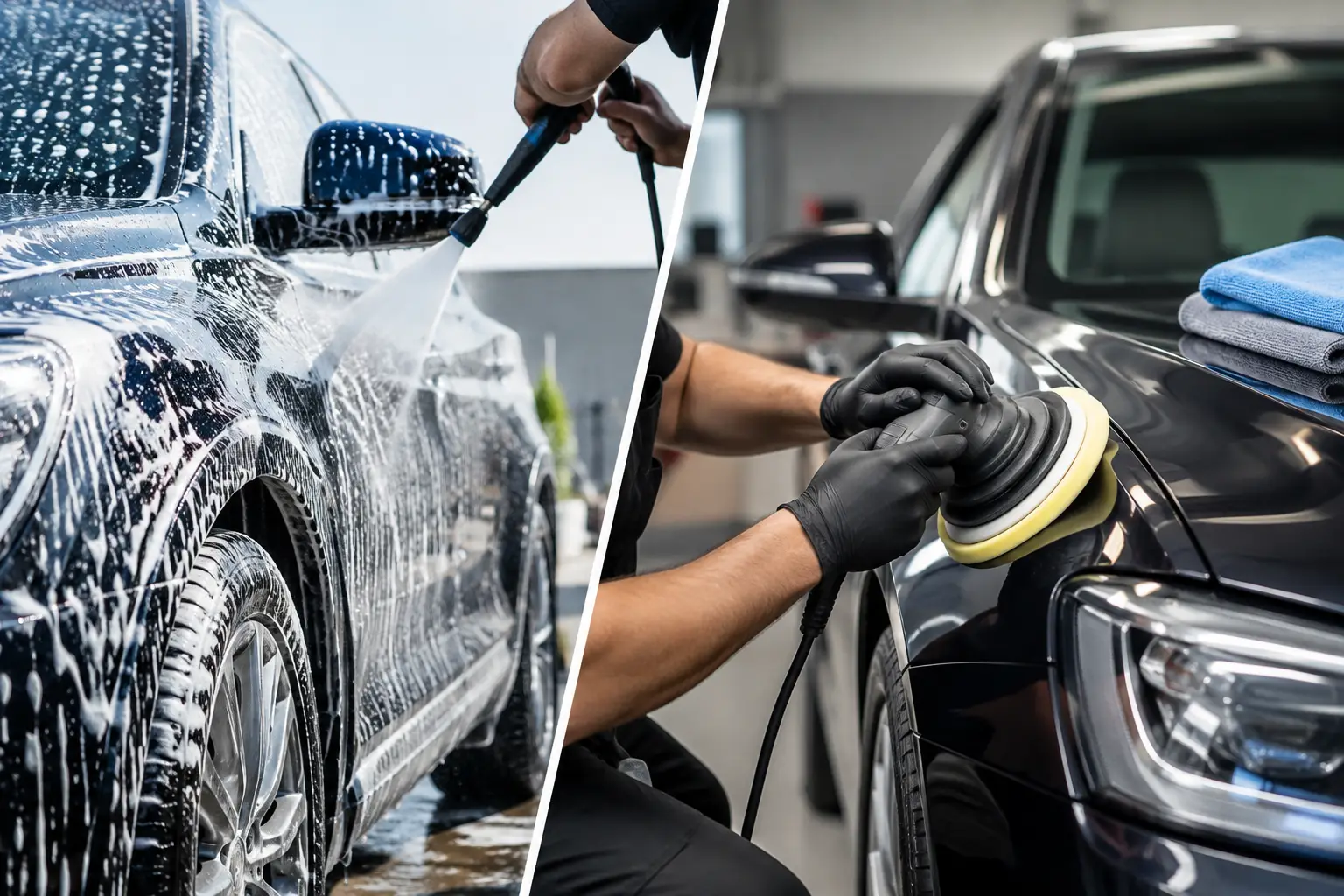
A vehicle can look clean after a 10-minute wash and still carry the signs of daily use: road film bonded to the paint, brake dust baked into the wheels, salt residue in the carpet, and grime hiding in every seam. That is the real difference in professional detailing versus car wash service. One is designed for quick, visible cleanliness. The other is built around restoring, protecting, and maintaining the condition of your investment.
For drivers in Rapid City and across the Black Hills, the right choice depends on how you use your vehicle, its current condition, and what you want from the service. A weekly commuter, a work truck, a weekend motorcycle, and a family RV do not all need the same level of care.
Professional Detailing Versus Car Wash: The Real Difference
A car wash focuses on removing loose dirt from the exterior. Depending on the wash, that may include a rinse, soap, wheel cleaner, drying, and perhaps a quick vacuum or wipe-down. It is convenient, affordable, and useful when your vehicle needs a fast reset after rain, mud, or a dusty drive.
Professional detailing is more deliberate. A detailer evaluates the vehicle's surfaces and condition, then uses appropriate products, tools, and techniques to clean areas a standard wash does not address. That can include deep interior cleaning, stain treatment, careful wheel and tire care, decontamination of painted surfaces, odor removal, conditioning of leather or trim, and protective applications.
The distinction is not simply that detailing takes longer. It is that the work is more targeted. A quality detail addresses the materials that make up your vehicle - clear coat, plastic trim, glass, leather, vinyl, fabric, rubber, metal, and carpets - rather than treating the entire vehicle as one surface.
What a car wash does well
A car wash is a practical maintenance tool. It removes loose dust, surface mud, pollen, bugs, and everyday road grime before they make the vehicle look neglected. For someone who parks outside, drives frequently, or simply wants a clean vehicle before the weekend, a wash can be the right answer.
It is also a sensible choice when the vehicle is already well maintained. If the interior is tidy, the paint is protected, and there are no embedded contaminants or stains, routine washing helps preserve the results of previous professional care.
The trade-off is that speed limits depth. Tunnel washes and quick hand washes generally cannot spend the time needed to clean door jambs, restore neglected trim, extract debris from carpets, or safely correct paint defects. Their purpose is maintenance, not restoration.
What professional detailing adds
Professional detailing begins where a basic wash stops. On the exterior, the process may include a hand wash, wheel and tire treatment, paint-safe decontamination, detailed cleaning around emblems and trim, glass care, and a quality protectant suited to the surface. On the interior, it can mean thorough vacuuming, compressed-air cleaning in tight areas, shampooing or extraction, leather cleaning and conditioning, and careful treatment of touchpoints, panels, and vents.
A professional detail can also address issues that are easy to overlook until they become frustrating: sunscreen buildup on leather, dog hair embedded in upholstery, salt lines on floor mats, cloudy windows, spilled drinks, smoke odors, and grease tracked in from work or recreation.
For vehicles with dull paint, swirls, oxidation, or light scratches, paint correction may be the appropriate next step. That service is not part of every detail, and it should not be sold as though it is. Paint correction is a specialized process that improves the appearance of the clear coat by safely reducing visible defects. It requires proper inspection, the right equipment, and a realistic understanding of what the paint can support.
The Difference You Can See and Feel
The immediate difference after a car wash is visual: cleaner paint, clearer glass, and less dust. After professional detailing, the difference is usually more complete. The vehicle feels cared for when you open the door, sit in the driver's seat, and look closely at the areas you touch every day.
That matters because dirt is not always obvious from a few feet away. Brake dust can damage wheel finishes over time. Road salt and winter residue can work into carpets and lower body areas. Tree sap, bug splatter, and mineral deposits can bond to exterior surfaces. Neglected leather can dry out, while plastic trim can fade or become difficult to clean evenly.
Black Hills driving creates its own mix of challenges. Gravel roads, changing weather, pine pollen, wildlife, construction dust, road treatment, and long summer drives all leave their mark. A professional service is valuable when those conditions have accumulated beyond what a quick wash can reasonably remove.
Protection Is Where the Value Changes
Cleaning improves appearance. Protection helps preserve it.
Many car washes offer a spray wax or protectant as an add-on. These products can provide short-term water beading and extra shine, but they are generally applied quickly and are not a substitute for a properly prepared, professionally protected surface. Their value is convenience, not long-term correction or preservation.
Detailing gives the vehicle a stronger foundation for protection because surfaces are cleaned more thoroughly first. Depending on the vehicle and service selected, that may involve paint protection, trim conditioning, interior fabric protection, leather conditioning, or specialized glass treatment. The right option depends on your goals, parking habits, driving conditions, and budget.
There is no need to overbuy. A lightly used garage-kept sedan may need different care than a truck that sees job sites, a family SUV carrying kids and pets, or an RV exposed to long periods of sun and weather. Honest recommendations should match the vehicle's actual needs, not push every available add-on.
Cost: Quick Maintenance vs. Long-Term Care
A car wash costs less because it is designed to serve a simple purpose quickly. It is a recurring maintenance expense, much like fuel, windshield washer fluid, or routine vacuuming.
Professional detailing costs more because it requires more labor, more time, specialized products, and greater attention to the vehicle's condition. The price can vary based on size, interior condition, pet hair, stains, paint condition, and the selected level of protection. A compact sedan that receives regular care is not the same project as a heavily used three-row SUV or an RV returning from a long trip.
The useful question is not whether detailing is more expensive than a wash. It is whether it is worth the result you need. If you are preparing a vehicle for sale, recovering from a hard season of use, protecting a newer purchase, or restoring pride in a daily driver, detailing often provides value that a wash cannot.
Transparent tiers matter here. A clear service menu helps you choose between a maintenance detail, a deeper interior and exterior reset, or correction and protection work without surprises. You should know what is included, what requires additional time, and why.
When a Car Wash Is Enough
Choose a car wash when the vehicle is already in good shape and needs regular upkeep. It is ideal for removing fresh surface grime between more thorough services, especially if you wash often enough to prevent dirt from building up.
A car wash is also useful before a road trip, after a messy weather event, or when you want to keep a protected vehicle looking presentable. Just be realistic about its limits. If the paint feels rough after washing, the interior still has odors or stains, or the vehicle looks clean from a distance but tired up close, it may be time to move beyond a quick wash.
When Professional Detailing Is the Better Choice
Professional detailing makes sense when condition, protection, or presentation matters. It is especially useful after winter, before selling or trading in a vehicle, following a busy travel season, or when you have purchased a used vehicle and want a true reset.
It is also the better choice for specialty vehicles that deserve material-specific care. Motorcycles have intricate components and exposed finishes. Trucks and SUVs collect dirt in larger cargo areas and textured trim. RVs and trailers face heavy exposure to sun, bugs, and road debris. Each benefits from a process tailored to the vehicle instead of a one-size-fits-all wash.
For local owners who value convenience, mobile detailing can be a strong option when conditions allow. Shop-based service may be preferable for more intensive work, weather-sensitive treatments, or jobs requiring specialized equipment. The best setting is the one that supports the quality of the service, not simply the fastest appointment.
Build a Care Schedule That Fits Your Vehicle
Most vehicles benefit from both services at different times. Regular washing keeps contamination from piling up. Periodic professional detailing restores the areas routine maintenance misses and refreshes the protection that helps the vehicle withstand real life.
A practical schedule may mean washes as needed and professional detailing a few times a year, with timing adjusted for how the vehicle is driven and stored. Someone commuting paved roads with a garage may need less frequent deep care than someone hauling gear, traveling back roads, or carrying children, pets, and outdoor equipment every week.
Your vehicle does not need to be showroom perfect to deserve professional care. It needs a plan that respects how you use it and protects the pride you take in owning it. When the dirt, wear, and damage go deeper than the surface, a soul-deep clean is not an indulgence. It is care that shows every time you get behind the wheel.