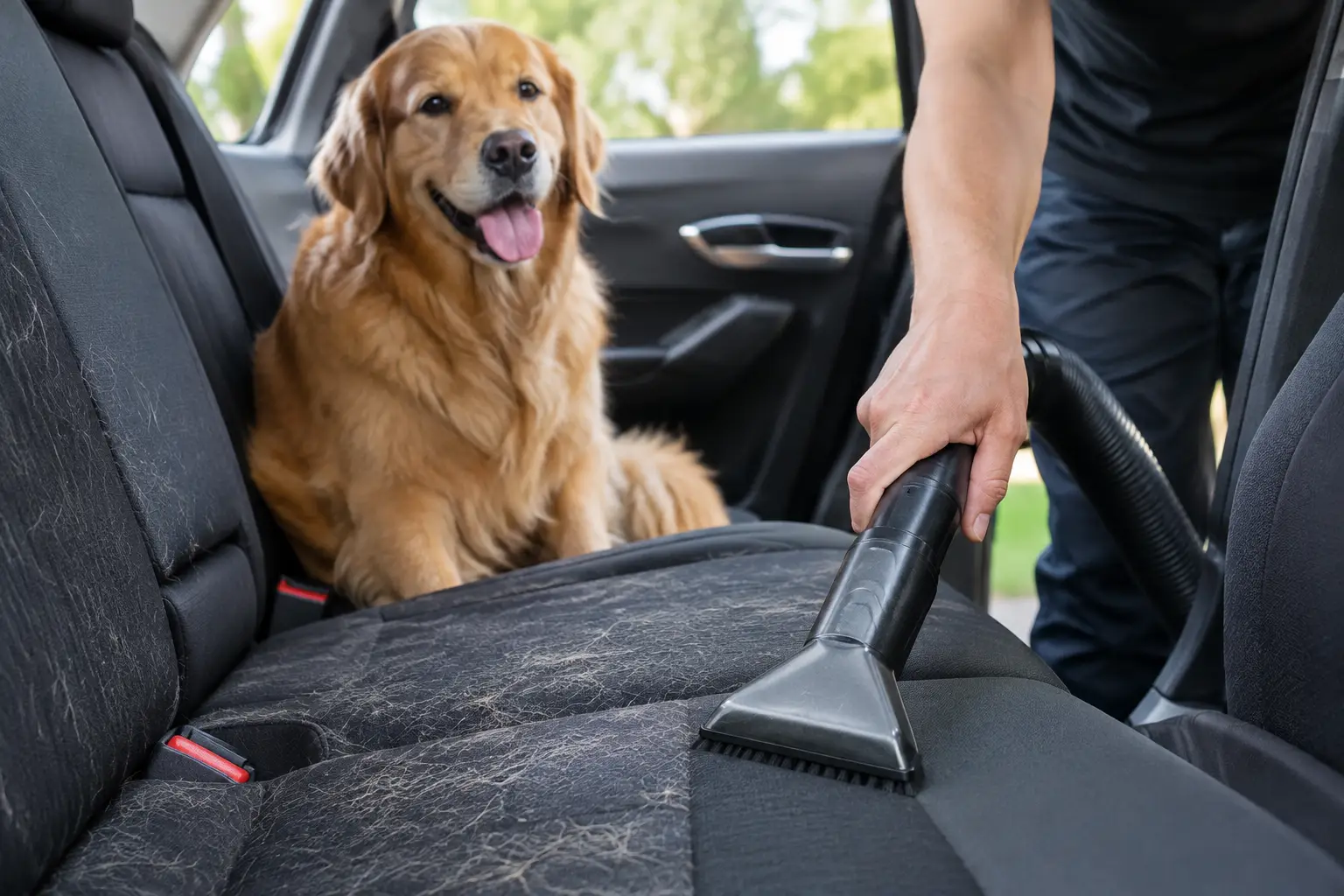
A weekend in the Black Hills with a dog can leave more than muddy paw prints behind. Fur settles into carpet, wraps around seat fabric, and works its way into cargo areas long after the ride is over. So, can detailing remove pet hair? In most cases, yes. Professional interior detailing can remove the vast majority of pet hair, including the stubborn fur that a household vacuum leaves behind.
The result depends on the vehicle, the type of upholstery, how long the hair has been there, and how deeply it has become embedded. A detailer can make a dramatic difference, but an honest service provider will also tell you when a few strands may remain in worn carpet, damaged upholstery, or hard-to-reach seat mechanisms.
Can Detailing Remove Pet Hair From Every Surface?
Pet hair does not behave the same way on every material. Loose hair on floor mats, leather seats, plastic trim, and cargo liners is usually straightforward to remove. The real challenge is the fine, short fur that becomes woven into carpet fibers and cloth upholstery. Static electricity can make it cling tightly, while daily use pushes it deeper into the material.
Professional detailing goes beyond a quick vacuum pass. The interior is inspected, vacuumed from multiple angles, and treated with tools and techniques designed to loosen hair before it is extracted. Detailers may use specialized brushes, rubber tools, compressed air, crevice attachments, and fabric-safe methods to pull hair from areas a standard vacuum cannot reach.
This process is especially valuable in SUVs, trucks, and crossovers that carry dogs in the back seat or cargo area. Fur often collects beneath seat edges, around anchor points, inside door pockets, and along the seams where carpet meets plastic trim. Those are the places that make a vehicle still feel hairy even after a do-it-yourself cleanup.
Why a Home Vacuum Often Falls Short
A strong household vacuum can remove surface fur, but it is not always enough for a true reset. Most pet owners have experienced the frustration of vacuuming a seat repeatedly only to find more hair after brushing the fabric with a hand. That is because embedded hair needs to be agitated and lifted, not simply pulled from above.
There is also the issue of access. Vehicle interiors have narrow gaps, rails, vents, and seat tracks that are difficult to clean without the right attachments and enough time. Removing pet hair properly requires patience. Rushing the job can leave visible clumps along seams and hidden fur that continues to circulate through the cabin.
A professional detail also addresses the dirt that travels with your pet. Dust, dander, dried mud, crumbs, and occasional moisture can settle into the same surfaces as the fur. Removing the hair without cleaning the surrounding upholstery may improve appearance, but it will not deliver the fresh, cared-for feeling most owners want.
What Professional Pet Hair Removal Includes
The right detailing service is not just about making seats look better. It is about restoring the cabin to a cleaner, more comfortable condition for everyone who rides in it. A thorough pet-hair-focused interior detail typically starts with removing loose debris and working through the carpets, mats, seats, cargo space, and upholstery seams.
From there, the detailer concentrates on the areas your pet uses most. For one owner, that may be the rear bench seat. For another, it may be an RV entryway, the passenger footwell, or the cargo area of a daily-driven SUV. This is why professional service is more effective when it is tailored to how the vehicle is actually used.
Depending on the condition of the interior and the service selected, the process may also include cleaning hard surfaces, treating cup holders and door panels, shampooing or extracting fabric where appropriate, and deodorizing the cabin. Pet hair removal and odor removal are related, but they are not the same service. Fur can be removed thoroughly while odor remains in damp carpet, upholstery foam, or a neglected cargo mat.
Pet Hair, Odors, and Allergens: What to Expect
If your goal is to prepare a vehicle for resale, welcome a new passenger, or simply enjoy your commute without fur on every dark shirt, professional detailing can be a worthwhile investment. It improves visible cleanliness and helps reduce the dust, dander, and debris associated with pet travel.
Still, it helps to set realistic expectations. Detailing is not a medical-grade allergen guarantee, and it cannot reverse years of wear in heavily used upholstery. If a pet has repeatedly had accidents in the vehicle, odor may have reached the padding beneath the visible carpet or seat fabric. In those cases, additional odor treatment or deeper restoration may be needed.
Likewise, coarse white hair on black carpet is often highly visible even after a careful cleaning. A detailer can remove what is embedded and leave the area dramatically improved, but lighting and fabric texture can make an occasional strand easier to notice. Transparent expectations matter, particularly with older vehicles and interiors that have seen many seasons of pet travel.
How to Get the Best Result Before Your Appointment
You do not need to spend hours cleaning before a professional detail. In fact, leaving the fur in place helps the detailer see the full condition of the cabin and allocate time appropriately. However, removing personal belongings, pet toys, blankets, crates, and loose gear from the vehicle allows the service to focus on the surfaces that need attention.
If your pet rides in a specific area, point it out when scheduling. Let the detailer know whether the concern is shedding, odor, stains, muddy paws, or a combination of all four. Clear information helps match the work to the vehicle's condition instead of treating every interior like the same quick clean.
For mobile appointments, make sure the vehicle is accessible and that the detailer can open all doors, the hatch, and storage areas. For shop service, mention any special access issues, such as a stuck seat, aftermarket seat covers, or equipment stored in the cargo area. Small details can affect how thoroughly hidden fur can be reached.
Keeping Pet Hair Under Control After Detailing
Once the cabin has been brought back to a cleaner standard, a few simple habits can protect the result. Use a washable seat cover or cargo liner where your pet rides most often. Keep a dedicated towel or blanket in place for short trips, and shake it out before the hair has time to work into the upholstery.
Regular brushing before a road trip also makes a meaningful difference, especially during seasonal shedding. A quick vacuum of the pet area every week or two is far easier than waiting until hair has built up for months. If your dog rides in the vehicle often, recurring interior detailing can keep the job manageable and preserve the pride you feel when opening the door.
For Rapid City and Black Hills vehicle owners, pet hair is simply part of an active life with animals. It does not have to become a permanent feature of your interior. Soul Detailers can provide the focused, soul-deep clean needed to bring your cabin closer to the condition you want to drive every day.
A clean vehicle should still feel like yours, even when your best passenger has four paws. Address the fur before it becomes embedded, choose a service level that matches the condition of your interior, and enjoy the road without carrying every shed hair along for the ride.