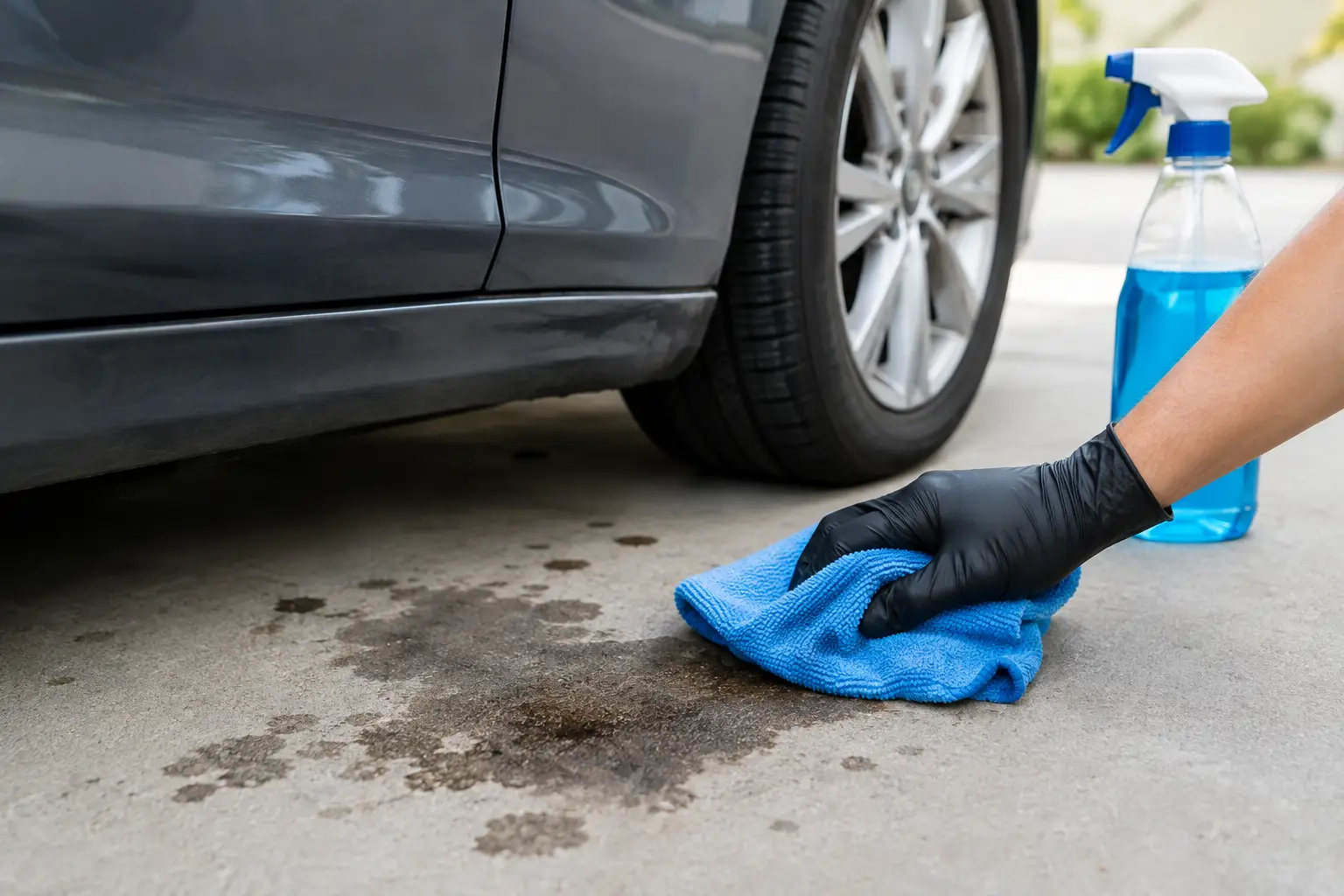
A fresh oil spot on your driveway is frustrating. A dark smear on your carpet, door panel, or painted fender is worse. Oil stains spread easily, attract grit, and can become far harder to remove once heat and time set them into a surface. The best approach depends on where the stain landed, what type of oil it is, and how long it has been there.
For vehicle owners in Rapid City and across the Black Hills, the goal should not be simply making the mark less noticeable. Proper cleaning removes the contamination while protecting the paint, trim, interior materials, and coatings that preserve your vehicle’s appearance and value.
Why Oil Stains Need a Different Approach
Oil does not behave like ordinary dust or mud. It is hydrophobic, meaning water alone will not lift it away. It also bonds to porous materials such as concrete, fabric, unsealed leather, and unfinished plastic. On a vehicle exterior, oil can trap abrasive dirt against the surface, leaving scratches behind if it is wiped aggressively.
That is why a single all-purpose cleaner is not the answer for every stain. A degreaser strong enough for an engine bay may dry out interior plastics or damage a fresh wax layer. A household solvent that seems effective on a garage floor can discolor carpet, haze clear plastic, or weaken paint protection.
The first rule is simple: blot or contain the spill before scrubbing it. The second is to use the mildest effective product for the surface. Speed helps, but careful technique matters more than rushing in with the strongest cleaner available.
Removing Oil Stains From Vehicle Paint
Oil on painted panels often comes from road grime, leaky fluids, fingerprints around a hood latch, or residue transferred during maintenance. If the paint is cool and the contamination is fresh, start with a quality automotive shampoo and plenty of clean water. Use a clean microfiber wash mitt, rinse it frequently, and avoid circular scrubbing.
If the stain remains, use a paint-safe degreaser or dedicated tar and oil remover according to its directions. Apply it to a microfiber towel rather than flooding the panel, work a small area gently, then rinse and wash the area again. This reduces the chance of product residue sitting on the finish.
Do not use gasoline, brake cleaner, oven cleaner, or harsh household solvents on painted surfaces. They may remove the visible oil quickly, but the trade-off can be dulled clear coat, stained trim, or damaged wax, sealant, and ceramic coating. Even when paint looks fine immediately afterward, stripped protection leaves it more exposed to contaminants and UV damage.
When the Mark Is Not Really Oil
A dull or dark patch that remains after cleaning may be etched contamination, road tar, oxidation, or an area where previous wiping scratched the finish. More chemical cleaner will not correct those issues. Damage like this may call for a professional assessment or a body shop rather than more cleaning.
Oil on Interior Carpet, Seats, and Door Panels
Interior oil stains call for patience. Whether it came from work boots, a takeout container, sunscreen, a greasy tool, or a leaking bottle, rubbing it deeper into the fibers is the most common mistake.
Start by removing excess material with a dry microfiber towel or paper towel. Press and lift rather than dragging the towel across the spot. For carpet and cloth upholstery, apply an absorbent material such as baking soda or cornstarch to a fresh stain, let it sit long enough to draw up oil, then vacuum it thoroughly.
Follow with an upholstery-safe cleaner or fabric pretreatment. Work it gently with a soft brush, blot with a clean towel, and repeat only as needed. Avoid soaking the area. Excess water can push oil farther into the padding below, create odor concerns, and leave a water ring as the fabric dries.
For leather, leatherette, vinyl, and coated door panels, use a cleaner designed for that specific material. These surfaces need a controlled cleaning method, not heavy saturation. After cleaning genuine leather, a compatible conditioner may be appropriate, but it should be used sparingly. Too much conditioner can leave a glossy, slick finish that attracts more dirt.
If the stain has been heated by sun exposure or has sat for months, complete removal is not always realistic with at-home methods. Professional interior detailing can make a significant difference because it combines proper chemistry, extraction tools, controlled agitation, and experience with different material types.
Cleaning Oil From an Engine Bay Without Creating Problems
A clean engine bay makes it easier to identify leaks and presents a more cared-for vehicle. It is also an area where aggressive cleaning can create expensive trouble. Modern engine bays contain electrical connectors, sensors, insulation, painted components, and delicate plastics that should not be saturated or pressure washed carelessly.
Work only on a cool engine. Cover or avoid sensitive components as appropriate, use an automotive-safe degreaser in controlled amounts, and agitate oily areas with soft detailing brushes. Rinse lightly rather than blasting every surface with high pressure. Once dry, inspect for active leaks instead of assuming the job is finished.
Cleaning the residue without addressing the source only buys time. Fresh oil around a valve cover, filter housing, pan, or other component should be checked by a qualified mechanic. Detailing improves condition and visibility, but it does not replace mechanical repair.
How to Treat Oil Stains on Concrete and Driveways
Driveway stains are especially noticeable on clean concrete, and they can become stubborn as the oil settles below the surface. Start by absorbing fresh oil with a dry absorbent product. Let it sit, sweep it up, and repeat if the spot is still wet. Never rinse fresh motor oil into the street, yard, or storm drain.
For remaining residue, use a concrete-specific degreaser. Apply it as directed, allow proper dwell time, scrub with a stiff nylon brush, and rinse responsibly. Multiple treatments are often necessary for older spots. Pressure washing can improve the result, but pressure alone usually does not remove deeply absorbed petroleum staining. It works best after the right degreaser has broken down the contamination.
Be realistic about aged stains. Concrete is porous, and a spot that has endured months of sun, rain, freezing temperatures, and vehicle traffic may lighten substantially without disappearing completely. A professional exterior cleaning service can assess whether treatment, hot-water cleaning, or repeated applications make sense for the surface and the stain’s condition.
Common Mistakes That Make Stains Worse
The urge to scrub hard is understandable, but it often creates a second problem. On paint, dry rubbing can scratch clear coat. In carpet, it spreads oil into clean fibers. On concrete, untreated runoff can carry contaminants where they do not belong.
Avoid mixing cleaners, especially degreasers, bleach, acids, or solvents. More products do not equal better cleaning, and incompatible chemicals can create harmful fumes or damage surfaces. Test any new product in an inconspicuous area first, particularly on older upholstery, aftermarket trim, matte finishes, and vehicles with ceramic coatings or paint protection film.
Also resist covering an oil stain with dressing, fragrance, or a quick surface wipe. That may improve the appearance for a day, but it does not remove the contamination. A soul-deep clean means treating the cause, not masking the evidence.
When Professional Detailing Is the Better Choice
DIY cleaning makes sense for a small, fresh spill on a durable surface when you have the right products and time to work carefully. Professional care is often the smarter choice when oil has spread across upholstery, reached headliners or seat belts, affected delicate leather, or contaminated multiple areas of the vehicle.
It is also worth bringing in help when an exterior stain is paired with swirls, dullness, or neglected protection. Soul Detailers can evaluate the material, stain age, and condition of surrounding surfaces before selecting a method that supports the vehicle’s overall finish rather than taking a shortcut that creates new damage.
A clean vehicle should feel cared for at every touchpoint, from the paint catching the Black Hills sun to the carpet beneath your boots. Address oil early, use products meant for the surface, and give stubborn stains the level of care they deserve.